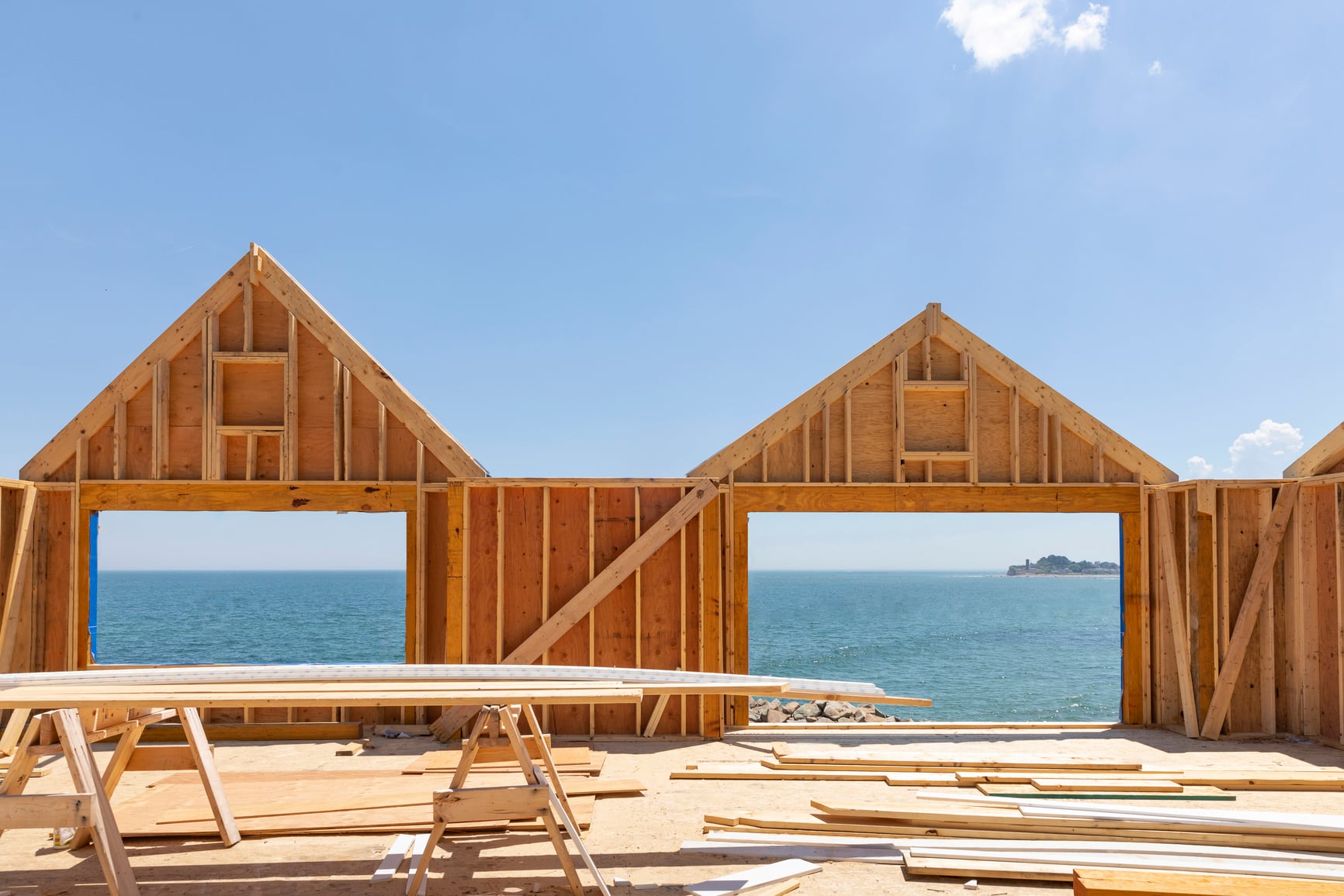
For a 5,000 sf custom home with a moderately complex roof and some steel detail, expect framing to land between eight and twelve weeks from sill plate to roof close-in. Simpler ranch-style or single-story homes land closer to six. Heavy steel-and-glass modernist designs can push to fourteen.
Here's the breakdown of where the time actually goes — and where projects slip.
Week 1 — Sill plate, deck, and first walls
The foundation has cured, the architect has confirmed the layout, and the framers arrive. Sill plates are pressure-treated, bolted down per the foundation anchor schedule, and double-checked for square. The first-floor deck goes in with rim joists and engineered I-joists or LVLs per plan.
By end of week one we usually have exterior walls plumbed and braced on the ground floor. Interior walls follow once the engineer confirms shear panel locations.
What slips this stage: plate-level changes from the architect, missing anchor bolts in the foundation, or sill-plate alignment off the foundation by more than 1/8".
Weeks 2 – 3 — Second floor & walls
Stairwell openings get framed, second-floor joists land on the bearing walls, and the second-floor deck is sheathed and ready for walls. Second-story exterior walls go up with the same rhythm — plumb, brace, double-check, then move on.
By end of week three we usually have all wall framing complete through the second story.
What slips: lumber package shortages (especially on weeks when LVL deliveries are delayed), or architectural plan revisions on window header sizes.
Weeks 4 – 5 — Roof structure begins
Truss day is a logistic event — crane scheduled, trusses staged on the lot the day before, the framing crew set to receive them as they swing. A typical custom-home roof takes two to four crane days depending on size and pitch complexity.
Once trusses are set and braced, the roof sheathing goes on per the engineer's shear schedule — usually ring-shank nails at tight spacing on perimeter panels.
What slips: weather (a windy day cancels the crane), truss delivery from the manufacturer (4 to 8 week lead time from order), or design changes that require re-engineering after order.
Weeks 6 – 7 — Steel, headers, and connector detail
If the design includes steel beams (W-flange or HSS columns), this is when the crane comes back for steel. The wood frame around the steel gets retrofitted to lock the assembly together — Simpson connector schedule, holddowns at exterior corners, shear transfer at every floor diaphragm.
This is the most rework-prone phase of any custom-home framing. If the wood detail doesn't match the steel detail (and the architect didn't catch it during plan-check), this is where it shows up.
Weeks 8 – 10 — Close-in, sheathing, and inspection
Roof underlayment lands, wall sheathing finishes, and the window and door rough openings are confirmed dimension by dimension against the architect's window schedule. The framing crew walks through with the lead, marks every variance, and corrects before drywall arrives.
The structural close-in inspection happens here — shear nailing, holdowns, anchor bolts, roof nailing pattern. AHJ signs the inspection card. Without that sign-off, no drywall.
Weeks 11 – 12 — Punch list and handoff
Window openings are confirmed final, plumbing and electrical pass-throughs are framed (typically by the trades, with framing carpenters on standby for header changes), and the structural frame is handed off to the GC for finish trades.
Where the realistic delays come from
In our experience on OC custom homes:
- Architect revisions during framing — adds 1 to 3 weeks per significant change. - Engineered lumber package issues — LVL or PSL shortages add 1 to 2 weeks if not pre-staged. - Marine layer weather — May/June fog can add a half week if the crew can't expose framing safely. - Inspection scheduling — most OC AHJs schedule 3 to 7 days out, so we always book the inspection a week ahead of expected ready date. - Steel coordination — by far the most common cause of multi-week slips. We push to lock steel detail *before* the foundation pours.
What Skyrise does differently
We frame to the structural set and the architectural set simultaneously. Discrepancies are flagged in week one — not in week ten when drywall is scheduled. The dimension-by-dimension reconciliation between the two sets is the highest-value thing a framing contractor can do, and most don't bother.
The result: predictable close-in dates, clean inspection sign-offs, and no surprise change orders coming from the framer.